Example · Ninox · AI in the product
Plain language becomes an application users can change themselves.
Ninox is a no-code platform small and mid-sized companies use to build their own business applications. The hurdle was the data model. With the CEO and the technical co-founder I designed how AI removes that hurdle without users losing control.

- Engagement
- Freelance, summer 2025, with the CEO and technical co-founder
- Principle
- Edit directly instead of only chatting
- Result
- Interaction model of Ninox’s public AI beta
01The starting point
Law firms, construction companies, contractors and inspectors use Ninox to build their own applications: order management, project lists, case files. Once a data model exists, Ninox generates the interfaces almost by itself.
That data model was the hurdle. People without database knowledge got stuck or hired a consultant. The idea: users describe their work in plain language, and AI generates the data model.
- PersonDescribeone sentence in plain language
- AIAI generatesthe data model directly in the editor
- PersonUser changes itby clicking or by chat
- Application runsa normal Ninox application
02What I did
- 1
Asked the real question
That AI could generate a data model was a given. My question was: what happens next, when someone without database knowledge sits in front of the result?
- 2
Ruled out chat alone
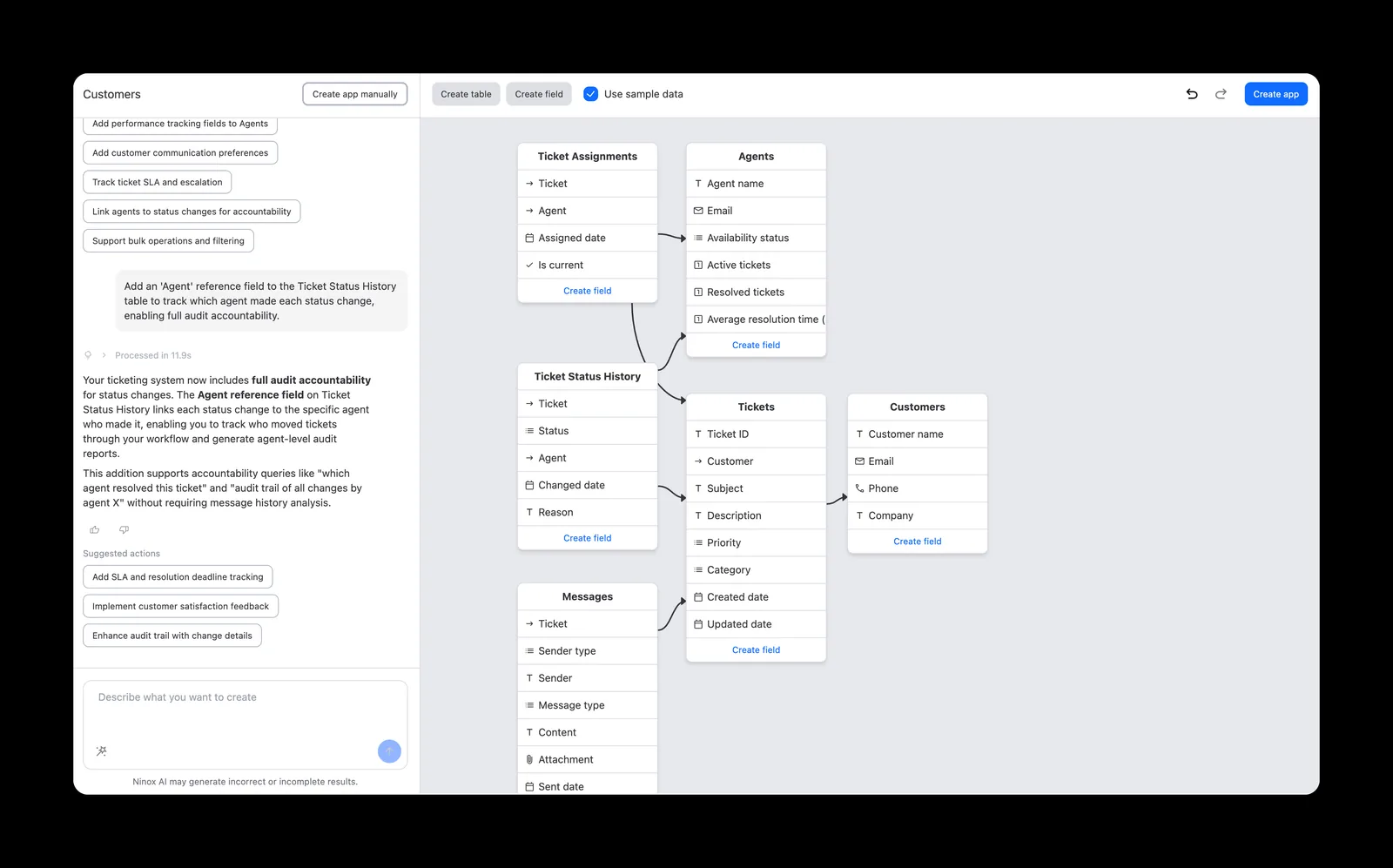
A realistic data model has eight to twelve tables. As text in a chat it is unreadable, and changing it by chat feels like programming in prose. And nobody writes a complete description in their first sentence: the first result is always somewhat off.
- 3
Result in the real editor
The AI generates the data model directly in the editor users already work in. Tables appear as cards, fields are clickable.
- 4
Two paths, one result
Users change things by clicking directly in the card or by chat, whichever is easier. Suggestions for obvious additions help them along.
- 5
No separate AI mode
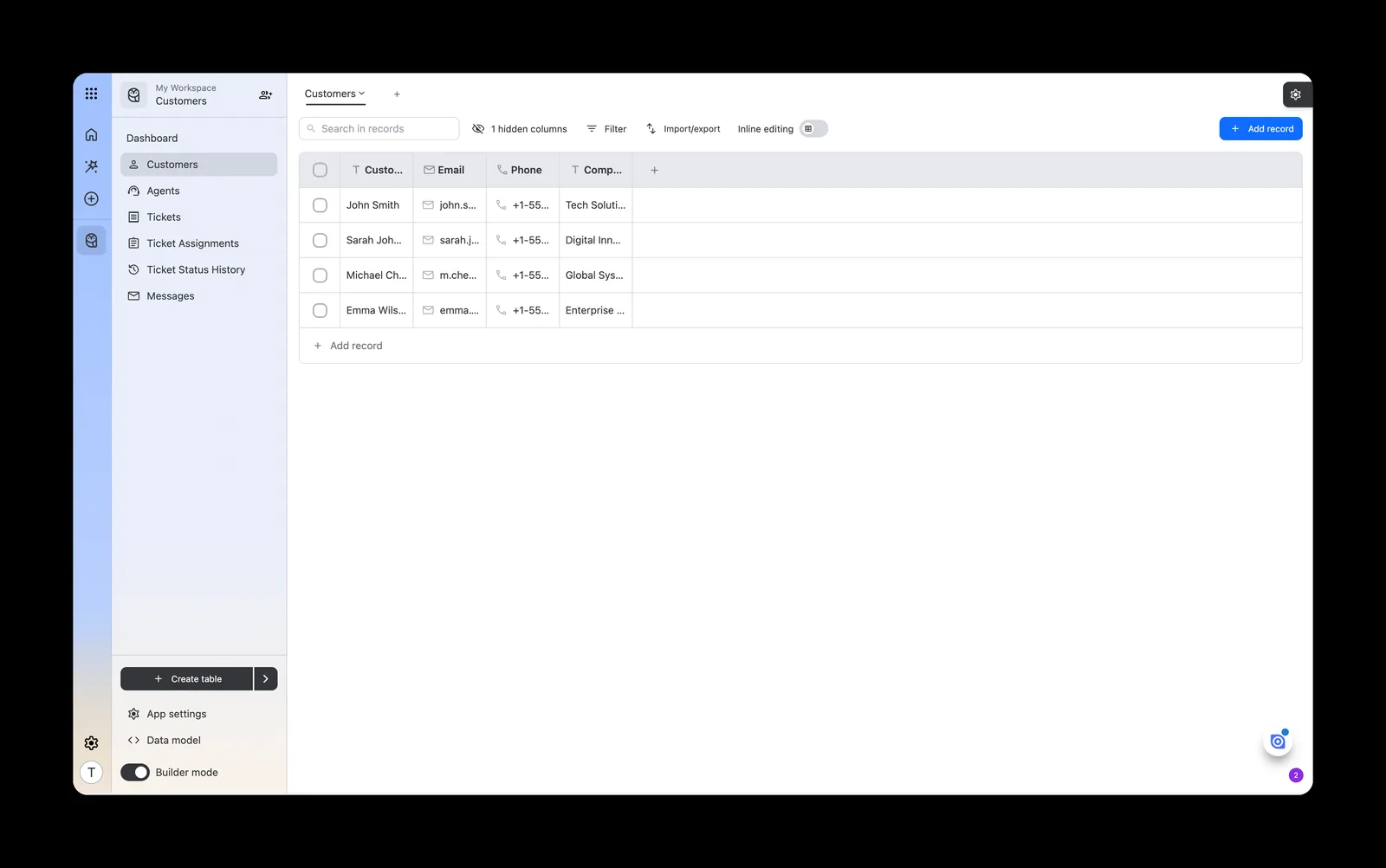
Once the data model is done, it is simply a Ninox application. Users keep working in the same tool.
Show the result first. Then let people edit it.
The design principle of the onboarding
03 What came of it
Edit directly
became the interaction model of Ninox’s public AI beta.
- Users do not have to learn how to talk to an AI first. They change what they see.
- The first, incomplete result is not an error but the normal start.
Why not chat alone
Chat only
- Data model as a long text output
- Describing changes in prose
- First result off: another chat round
In the real editor
- Tables as cards, fields clickable
- Change by click or by chat
- The first result is the normal start
04What this means for your company
When you bring AI into your own product or internal software, the question is not whether the AI can produce something. The question is whether your people can take ownership of the result. AI removes the blank page. Control has to stay with people.
- AI features in your own software product
- Configurators and quoting tools
- Internal forms and data entry
- Reports that specialists adjust
What it is not
- The AI generation itself was developed separately. My work was how people deal with it.
- I was not responsible for the whole beta.
Which process should improve first in your company?
In 30 minutes we talk about where AI could start for you. Free and without obligation.