Example · Bibel TV · Product development
From depending on an agency to: we build it ourselves.
At Bibel TV, almost every change to apps and systems depended on an external agency. There are no in-house developers. Today a large part of the backend and the first parts of the user interfaces are built in-house, by product managers and product owners working with AI.

- Before
- Almost every change went through an external agency
- Today
- Much of the backend and first interfaces built in-house
- Trust
- Leadership gave me the rebuild of the app
01The starting point
Bibel TV builds apps for iOS, Android, web and TV, but has no development department of its own. Almost everything ran through an external agency. Every change meant: describe it, commission it, wait.
The people who know what is needed work in-house: product managers and product owners. Until then, they could not build anything themselves.
- 2025AI as better research, with Gemini and Copilot
- Spring 2026Claude introduced, first prototypes in the team
- Summer 2026Individual applications and internal tools built in-house
02How it happened
- 1
2025: AI as better research
The team used Gemini and Copilot because they were already available, mostly for research.
- 2
Showing, not ordering
I built prototypes in real code, against real data. Development builds directly on that code. It showed what is possible better than any presentation.
- 3
Spring 2026: Claude introduced
With the team I introduced Claude Code, GitHub with Spec Kit and MCP servers for the internal documentation. The team then extended and prepared that documentation itself.
- 4
Rules, not sprawl
The company Claude account carries fixed rules, for example on formats, approvals and the use of sources. Everyone works to the same standards.
- 5
Guided one by one
Exchange with the product managers and product owners, and one-to-one sessions on their own tasks.
- 6
Since summer 2026: building in-house
The team builds individual applications and internal tools itself. I built the tools for automated testing and many of the internal tools myself.
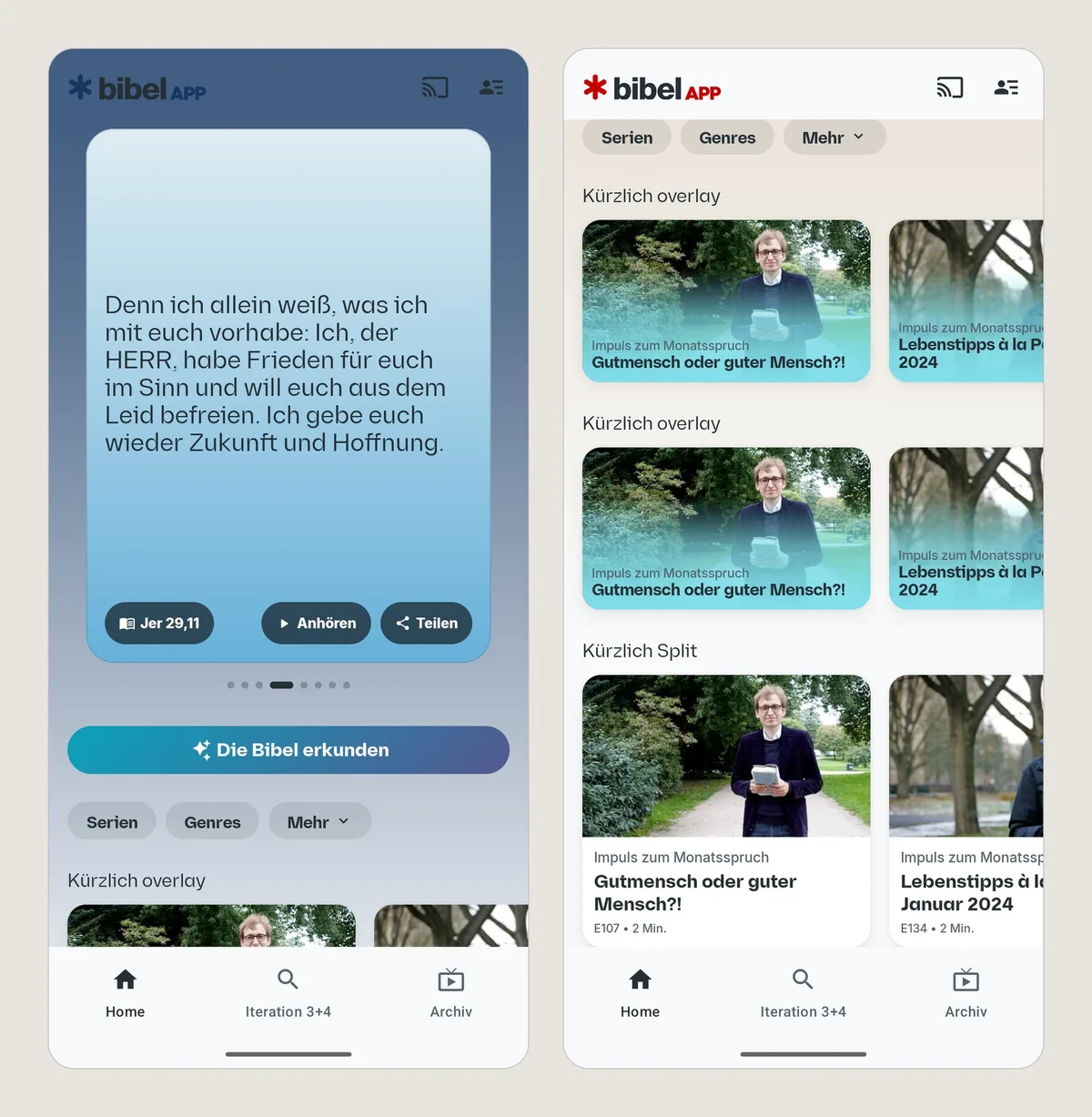
Showing, not ordering.
What made the rollout work
03 Where it stands
No agency
Leadership gave me the rebuild of the app. The trust came from the work before it. I built it myself, with AI.
- A large part of the backend and the first parts of the interfaces are now built in-house.
- The team has one or two internal champions who carry it forward.
- The new app has not been released yet.
The change is not finished. The team keeps working on it, step by step.
Before and today
Before
- Almost every change through an external agency
- Describe, commission, wait
- Product managers and owners cannot build themselves
Today
- Much of the backend in-house
- First interfaces in-house
- Fixed rules for formats, approvals and sources
- One or two internal champions
04What this means for your company
If you wait for a supplier for every change to your software, people in your company can build part of it themselves with AI. It works when three things come together: someone who shows how, fixed rules, and guidance on their own tasks.
- Internal tools and reports
- Interfaces between existing systems
- Prototypes before you commission development
- Automated tests
What it is not
- No replacement for architecture, IT security and review.
- No end to external partners: they are needed for what they really do better.
- Not self-running: without rules you get software nobody can maintain.
Which process should improve first in your company?
In 30 minutes we talk about where AI could start for you. Free and without obligation.